Medisas
Using technology to provide safer, more effective care for all
|
May 19, 2017

Engaging doctors with change has been one of the biggest challenges in medicine. In recent years, software technology has radically enhanced the way we look after our patients, digitizing many paper-driven documentation and administrative processes.
With hospitals facing issues with physician burnout and technology overload, it is increasingly critical to ensure clinicians are engaged for your next technology deployment. From our experiences and learnings at Medisas, we present 5 simple ways to engage doctors with technology.
Poor articulation and communication of the vision is commonplace in hospital software deployments. Effective communication of goals and objectives is critical to ensuring everybody involved is on the same page from the start. However, in hospitals, doctors and other staff who may be impacted can be distributed across various locations. Using multiple communication channels helps broadcast and emphasize the message to the majority.
We realized very early on that clinicians were much more likely to be engaged in the deployment process if they heard stories about this vision being successfully implemented elsewhere, with users like themselves. For teaching hospitals, discuss how residents at other hospitals use the new technology. For children’s hospitals, refer to user stories from other pediatric institutions. The more relevant your examples to your audience, the more the vision will resonate.
Example communication channels:
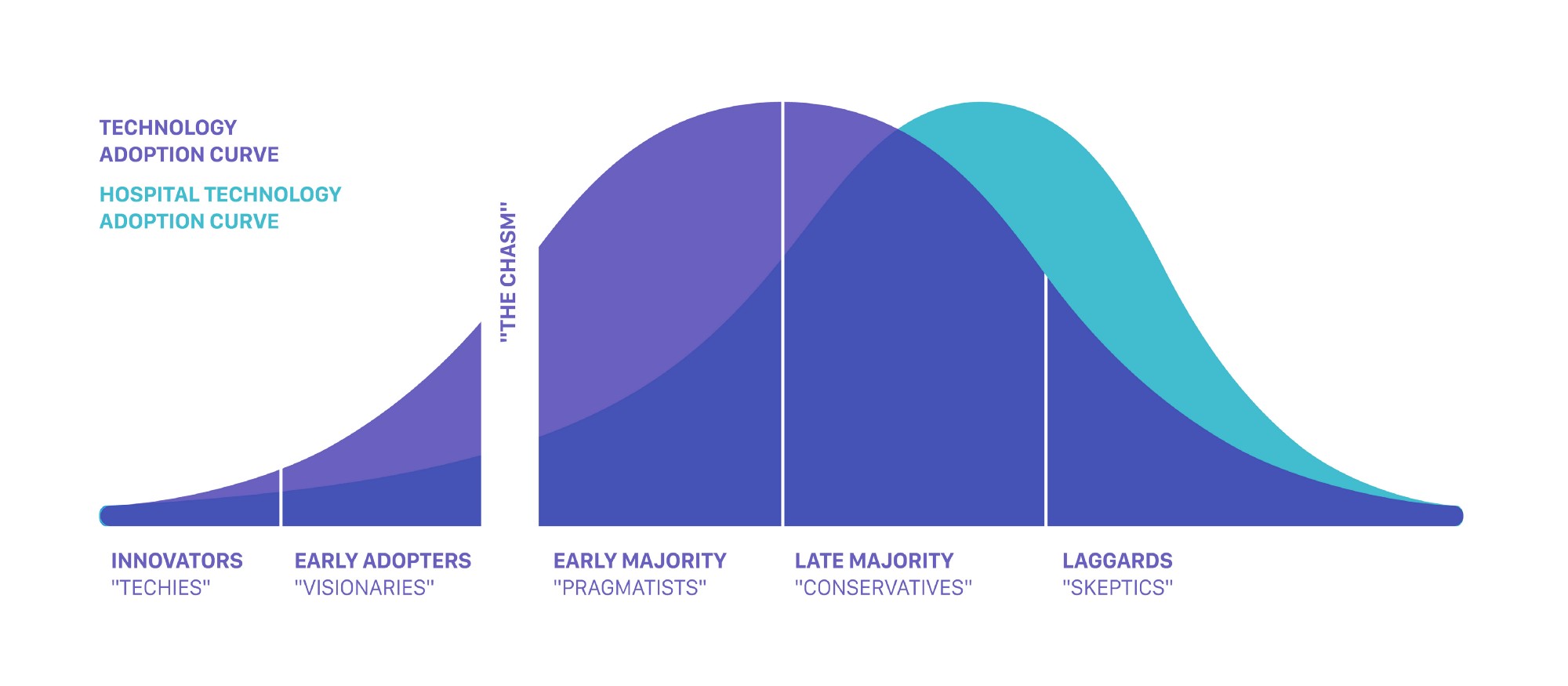
Geoffrey Moore popularized the technology adoption life cycle graph in Crossing the Chasm. With the medical community tending to be more risk-averse in embracing new innovations, the graph is skewed to the right, with fewer innovators and early adopters. Finding your evangelists may be more difficult, but they do exist and are key to a successful deployment.
How do you find your evangelist? Find individuals who are:
Hospitals are devising strategies to combat physician burnout. With the introduction of CPOE, electronic lab interfaces, EMRs, and other software systems over recent years, technology overload has become a major source of clinician dissatisfaction.
All the more important to make the problems your technology solves personal. Elicit frustrations about difficulties your users face with current workflows and existing tools. At Medisas, before each go-live, we shadow daily rounds, shift-to-shift handoffs, and discharge planning meetings to understand the pain points of doctors, case managers, and nurses. Each group of users will have a different perspective of why existing processes are flawed, so make sure you frame your technology in their language and how it will solve problems that are top of mind for them.
Get your staff excited about the grand vision, but minimize the risk of over promising and under delivering. Communicate your vision in a clear, phased approach, each with its own success criteria. Set expectations for:
One of the biggest mistakes when deploying technology is not having a consistent feedback mechanism. Hospitals are constantly under resourced, and once one project is completed, the next one is already running behind.
The key is to pass responsibility onto a super user group of people who have been engaged throughout the initial deployment process. Meet with them regularly, and encourage them to get feedback from others.
Set up a handful of easy ways for regular users to send you feedback: a dedicated phone line, email address, and a physical feedback box. It’s important to have multiple communication channels available. Remember that most clinicians are not used to giving feedback about technology, so you must be proactive in seeking it.

Engaging doctors with change has been one of the biggest challenges in medicine. In recent years, software technology has radically enhanced the way we look after our patients, digitizing many paper-driven documentation and administrative processes.
With hospitals facing issues with physician burnout and technology overload, it is increasingly critical to ensure clinicians are engaged for your next technology deployment. From our experiences and learnings at Medisas, we present 5 simple ways to engage doctors with technology.
Poor articulation and communication of the vision is commonplace in hospital software deployments. Effective communication of goals and objectives is critical to ensuring everybody involved is on the same page from the start. However, in hospitals, doctors and other staff who may be impacted can be distributed across various locations. Using multiple communication channels helps broadcast and emphasize the message to the majority.
We realized very early on that clinicians were much more likely to be engaged in the deployment process if they heard stories about this vision being successfully implemented elsewhere, with users like themselves. For teaching hospitals, discuss how residents at other hospitals use the new technology. For children’s hospitals, refer to user stories from other pediatric institutions. The more relevant your examples to your audience, the more the vision will resonate.
Example communication channels:
Geoffrey Moore popularized the technology adoption life cycle graph in Crossing the Chasm. With the medical community tending to be more risk-averse in embracing new innovations, the graph is skewed to the right, with fewer innovators and early adopters. Finding your evangelists may be more difficult, but they do exist and are key to a successful deployment.
How do you find your evangelist? Find individuals who are:
Hospitals are devising strategies to combat physician burnout. With the introduction of CPOE, electronic lab interfaces, EMRs, and other software systems over recent years, technology overload has become a major source of clinician dissatisfaction.
All the more important to make the problems your technology solves personal. Elicit frustrations about difficulties your users face with current workflows and existing tools. At Medisas, before each go-live, we shadow daily rounds, shift-to-shift handoffs, and discharge planning meetings to understand the pain points of doctors, case managers, and nurses. Each group of users will have a different perspective of why existing processes are flawed, so make sure you frame your technology in their language and how it will solve problems that are top of mind for them.
Get your staff excited about the grand vision, but minimize the risk of over promising and under delivering. Communicate your vision in a clear, phased approach, each with its own success criteria. Set expectations for:
One of the biggest mistakes when deploying technology is not having a consistent feedback mechanism. Hospitals are constantly under resourced, and once one project is completed, the next one is already running behind.
The key is to pass responsibility onto a super user group of people who have been engaged throughout the initial deployment process. Meet with them regularly, and encourage them to get feedback from others.
Set up a handful of easy ways for regular users to send you feedback: a dedicated phone line, email address, and a physical feedback box. It’s important to have multiple communication channels available. Remember that most clinicians are not used to giving feedback about technology, so you must be proactive in seeking it.

Thanks for your interest in Medisas! We'll get back to you shortly.


